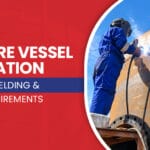
Pressure vessels are engineered to contain gases or liquids at pressures that can be significantly different from atmospheric pressure. They are used across industries such as oil and gas, petrochemicals, manufacturing, energy, and process engineering, where safety and reliability are critical.
Because a pressure vessel operates under pressure, its fabrication requires careful control of materials, welding procedures, inspection, testing, and documentation. Every stage of fabrication must be carried out according to the applicable design code and project specifications.
Materials Used in Pressure Vessel Fabrication
Material selection is one of the first and most important stages of pressure vessel fabrication. The selected material must be suitable for the design pressure, operating temperature, contained medium, corrosion conditions, and fabrication process.
Carbon steel is commonly used for many industrial pressure-vessel applications because of its strength and practicality. Stainless steel and alloy steels may be selected when greater corrosion resistance, temperature performance, or other specialized properties are required.
Welding and Fabrication Requirements
Welding is a critical part of pressure vessel fabrication because welded joints must withstand the operating stresses placed on the vessel. Welding procedures need to be properly developed and qualified for the materials and joint configurations being used.
Fabrication may involve processes such as plate cutting, forming, fit-up, welding, heat treatment where required, and dimensional inspection. Depending on the material and design, requirements for preheating, post-weld heat treatment, and toughness may also apply.
Inspection, Testing, and Quality Control
Quality control continues throughout the fabrication process rather than taking place only after the vessel has been completed. Inspection may cover incoming materials, welding procedures, dimensions, weld quality, and final assembly.
Pressure testing is another important stage. It provides an opportunity to verify the integrity of the completed vessel under controlled test conditions. ASME Section VIII includes requirements relating to fabrication, examination, inspection, and pressure testing of pressure vessels.
Conclusion
Pressure vessel fabrication requires careful coordination of material selection, qualified welding, inspection, testing, and documentation. Following the applicable engineering codes and maintaining strict quality control throughout fabrication helps ensure that pressure vessels can operate safely and reliably under demanding industrial conditions.
For professional vessel fabrication and industrial engineering solutions, visit https://sjsenersol.com.